
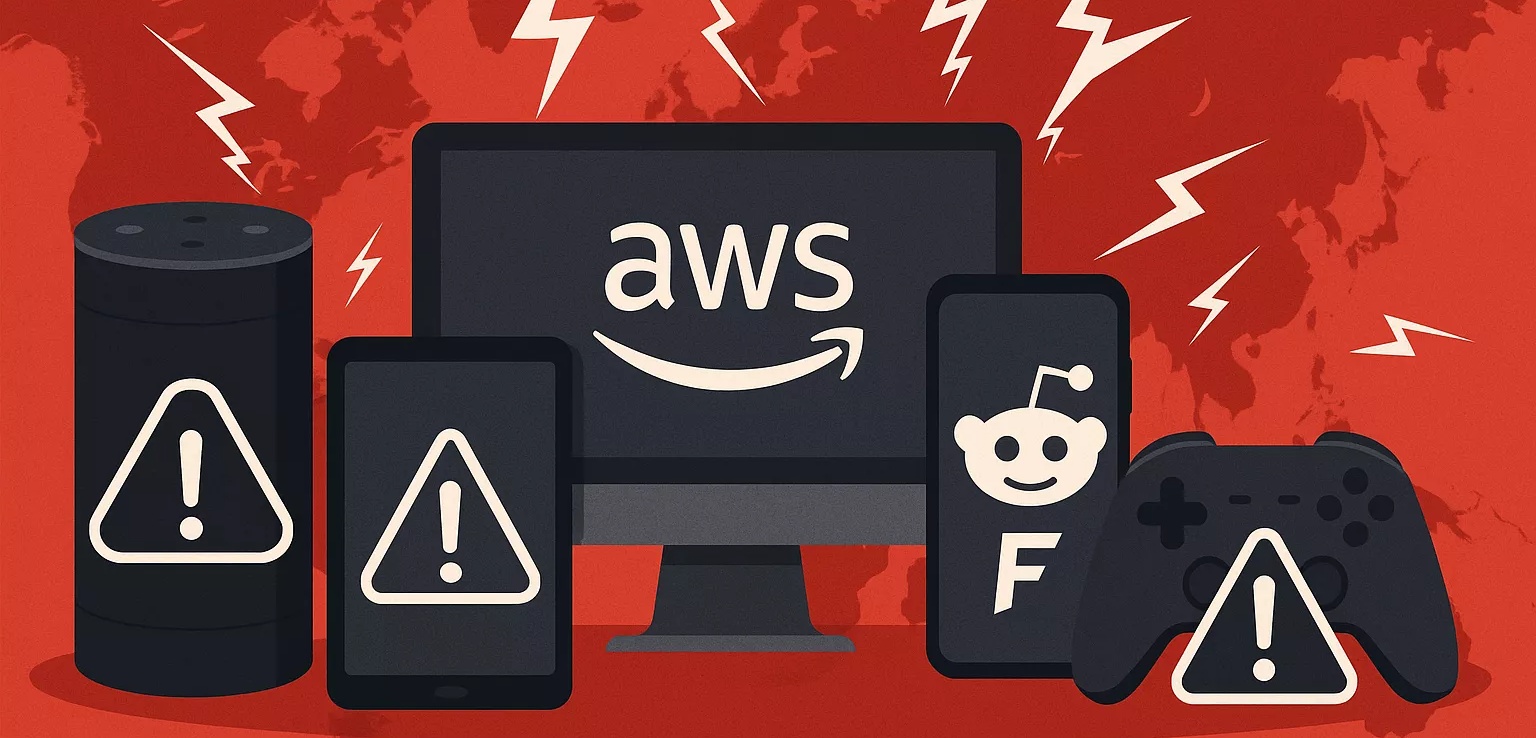
This Monday, the Amazon Cloud Service (AWS) was severely disrupted, resulting in millions of users around the globe not using mainstream games, streaming media platforms and applications. As a basic cloud service provider to support web services and daily online tools, AWS collapsed at 3 a.m. American Eastern Time after the core database product malfunction, and only gradually recovered at night.
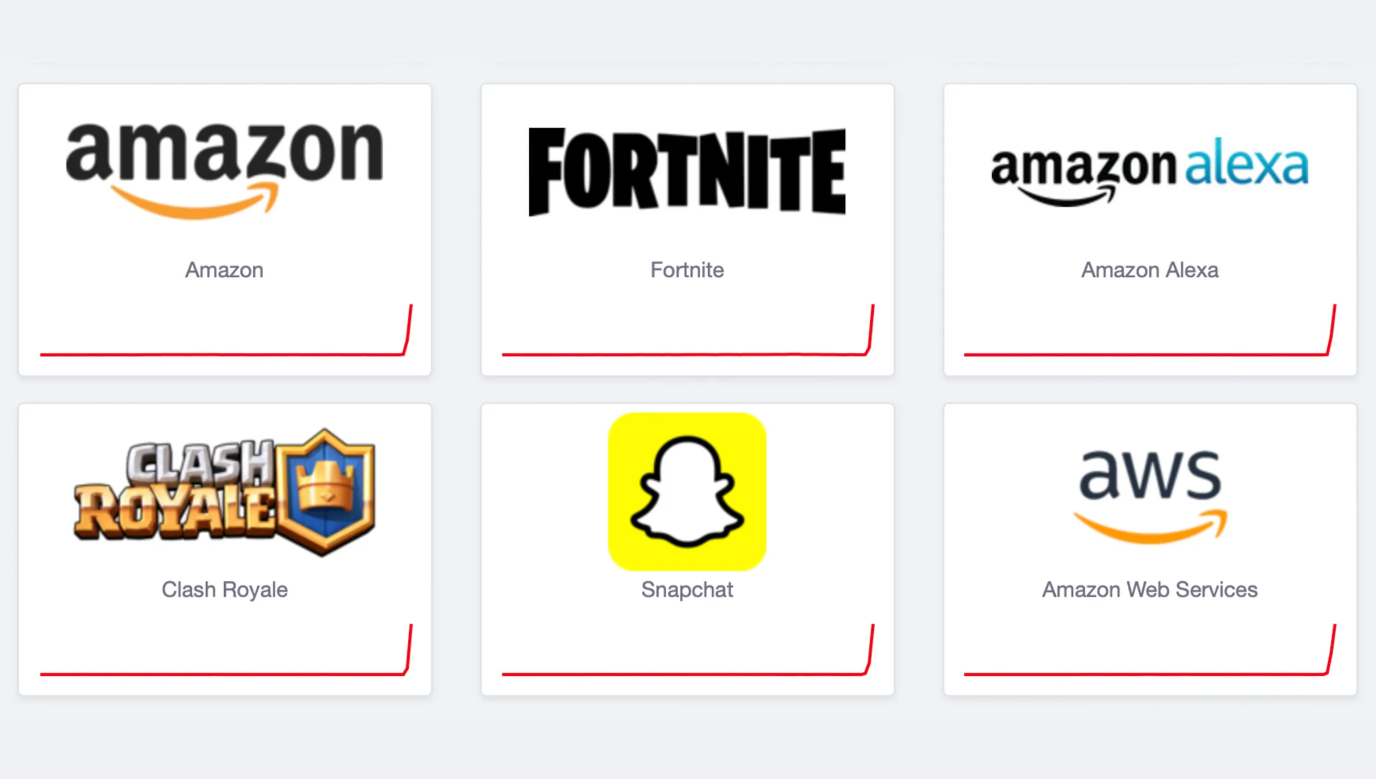
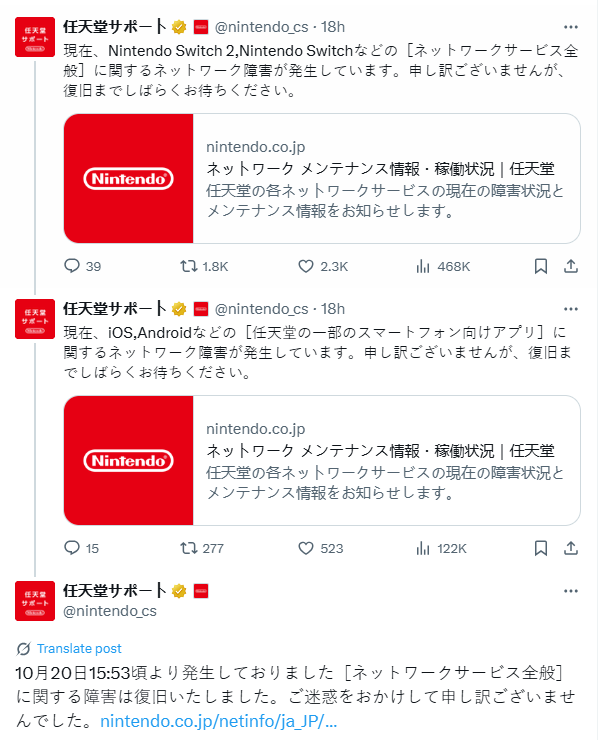
The impact of the failure was extremely wide: from Snapchat to McDonald’s, from the Ring Door camera in Amazonia to the Roblox and Epic fort night. The vulnerability of enterprises and financial institutions that rely on cloud-based servers was highlighted, as was the instant impact of unplanned disruptions on global business. AWS first reported this issue at 3:11 United States Eastern Time, alleging “operational failures” on 14 services of its regional data centre in US-EAST-1 in northern Virginia. In all, Downdetector received 6.5 million reports on the shut-down site, showing over 1,000 websites and services off-line worldwide. The affected platforms include:Nintendo Switch 2 and Nintendo Switch all related network services were disrupted
Epic Games: Epic Game Shop and Epic Online Service, several regions, including login, are unable to use Snapchat: Joint Airlines, T-Mobile, Starbucks, McDonald’s: Medical Insurance Services Unusually and América: The British Government Tax Customs website cannot be accessed during the open registration period: some users are unable to access the Joint Health Insurance providers’ query tool: Although AWS declared “total control” of database problems at 6:35, it confirmed at 10:14 that “a serious API error occurred in multi-services in the US-EAST-1 area”. It was not until 1603 that services were gradually improved, but, according to Downdetector, services such as Apple Music and FanDuel remained irregular until evening.
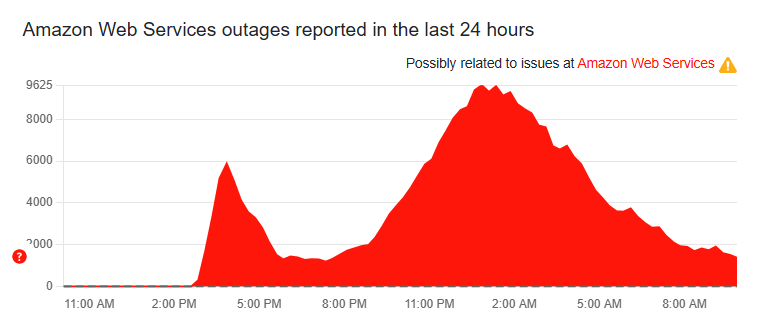
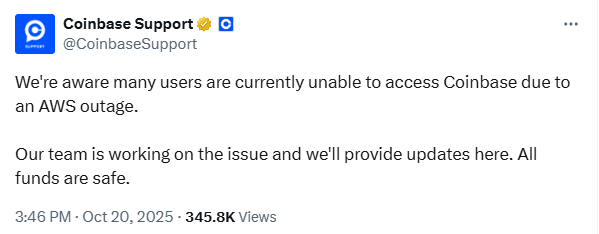
The source of the malfunction was identified as an internal network error of Amazon EC2, affecting multiple services such as DynamoDB and SQS. In its 11:43 statement, AWS stated: “The underlying reason is the bottom internal subsystem for monitoring the health status of the Network’s load balancer.” In order to restore functionality, the company took temporary measures to limit new requests from its customers. This is yet another major disruption of AWS after 2021 and 2023, which resulted in users not having access to airline booking and payment applications within five hours. This social media feedback shows that cloud games, social networks and self-owned services such as Amazon Prime Video and Kindle are affected. The encryption exchange Coinbase, the trade application Robin Hood, the payment application of Venmo and the multi-neighborship language learning platform have also experienced service anomalies. Media outlets, including Disney, The New York Times and Wall Street Journal, were similarly affected, and the Associated Press urgently launched a back-up system for breaking news.
According to Corina Keith-Spes, the digital director of the non-governmental organization Article 19, “These disruptions are not just technical failures, but also the failure of democratic institutions. When a single service provider is paralysed, key services cease to exist — the media are inaccessible, encrypted communications are closed to Signal and the infrastructure that sustains a digital society collapses in an instant.” The technology giant Mask also expressed “unbelievably weird” in response to the interruption of Signal’s services, stating that “AWS can cut Signal at any time”. It is noteworthy that, as the AWS automated support system is equally offline, users are unable to report on problems in a timely manner. As a giant in cloud computing, AWS has recently invested continuously in artificial intelligence products, generating $107 billion in fiscal year 2024, or 17 per cent of total Amazonia, and its service stability is of vital importance to the global digital ecology.