
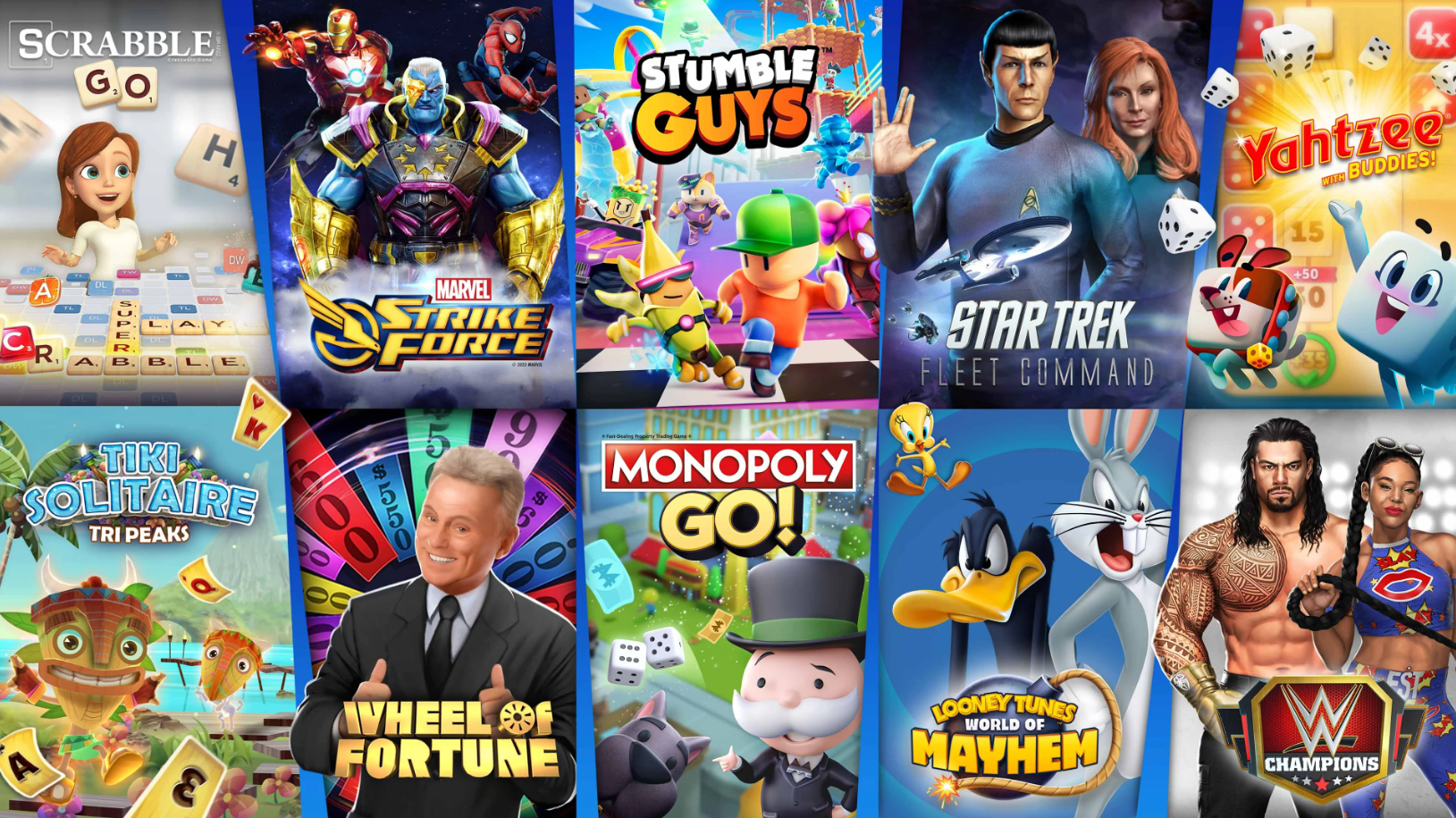
Spopely, a well-known game such as Stumble Guys, Star Trek: Fleet Commander, Mandarin, WWE Champion, built a diverse game empire for almost 15 years. The game is so rich under the flag that the players know only that the game knows little about developers. And that’s the goal of Spopely: not just for a specific group of users, but to provide a match game based on the taste of different players.
Spopely was founded in L.A. in 2011 and was bought in April this year by Saudi game giant Savvy Games Group for $4.9 billion, making it the second largest mobile game distributor in the world. Its cumulative income exceeded $10 billion in 2024, with over 1 billion game downloads. This spring, the second year on-line of Monopoly Go!, generated a cumulative income of $5 billion, and at the end of May Spopely also acquired a profit-making game sector under Niantic’s banners, including ” Boggo ” , ” Monster Hunter Now ” .
Joint CEO Spopely Walter Delave recalled: “In the early stages of entrepreneurship, although there is no specific road map, we are convinced that recreation is one of the most basic human needs, and that software will reach unprecedented levels of game interaction. If you can create an experience that allows players to build deep social connections through games, the product can last forever.” In the early 2010s, the business model of the game was shifting from a buyout to a free, real-time service “forever online, continuously evolving”. According to Walter Delafer, “the infrastructure needed at that time was very different and, like any other form of entertainment, would be a great market opportunity, but eventually concentrated in the hands of a small number of businesses with global distribution capabilities, substantial financial resources and sustainable commercialization.”

Chief Operator Javier Ferreira, who joined in 2014, proposed three main strategies for competitive advantage: first, at the technical level, free games need both game and technology, and real-time services need a strong technical capacity to support the analysis of player behaviour data; second, the concept of development, which works extensively with the top global development team as a result of breaking internal talent constraints; and third, the distribution advantage, with the top IP trajectories in the era of app stores. The most diverse product matrix in the industry is supported by the proprietary technology platform Playgami. Its chief cashier, Tim O ‘ Brien, was acquired with a $4.9 billion valuation through the introduction of top IPs such as the Monopoly. Spopely has now worked with Manwe, Disney, Warner Brothers and others to create six games with over $1 billion in revenues.
Looking ahead, Spopely will continue to advance the M&A strategy, but will focus more on deepening existing partnerships. Tim O’Brien stressed: “Our model is to seek the world’s top team, or to integrate it with the global IP, or to develop the original IP. Finalization of acquisitions through long-term cooperation is essential for the creation of a series of youths.” Spopely’s biggest competitor as a first-hand United States cruiser is himself. “We have six games with over $1 billion in revenues, but they do not create internal competition. The real challenge is to create products that deserve the time and attention of the player.” Through the real-time operation and free-of-charge model, Spopely has repeatedly broken the passwords that continue to attract players, a contemporary business philosophy that is being learned in the traditional entertainment industry.